The landscape of modern retail is defined by a relentless pursuit of value, where the efficiency of a supply chain often dictates the survivability of a brand. For decades, the Midwest has been home to a unique retail phenomenon known as the discount liquidation model, epitomized by the success of unclaimed freight of mn. This business model, built on the acquisition of abandoned or overstock goods at deep discounts, created a loyal consumer base that equates the region with high-quality furniture and home goods at fraction-of-retail prices. However, as we move further into the digital age, the limitations of local liquidation—unpredictable inventory and restricted scale—are becoming apparent. To evolve, savvy business owners are looking toward the vast potential of wholesale china online shopping to replicate that legendary “unclaimed” price point with a level of consistency and volume that only a global manufacturing powerhouse can provide.

Table of Contents
The Strategic Convergence of Local Liquidation and Global Digital Procurement
The enduring appeal of the unclaimed freight of mn model lies in the psychological satisfaction of the “treasure hunt.” Consumers enter a warehouse expecting to find premium items at liquidation prices because the middleman has been removed or the logistical circumstances forced a price drop. In the traditional sense, this relied on the random nature of freight insurance claims or shipping errors. Today, the global B2B landscape allows businesses to create this “liquidation price” intentionally. By utilizing advanced digital platforms to connect directly with factories in China, a retailer in Minnesota can secure factory-gate pricing that rivals or even beats the costs of local unclaimed freight, all while maintaining a steady flow of trending products.
The Legacy of Value in the Midwest Retail Market
The success of discount furniture and freight outlets in Minnesota is deeply rooted in the economic sensibilities of the region. Local businesses built their reputations by offering substantial savings on durable goods, particularly in the furniture and home appliance sectors. This created a market expectation where quality was non-negotiable, but the MSRP was always seen as a starting point for negotiation rather than a final price. As these local outlets expanded, they faced the challenge of sourcing enough “unclaimed” inventory to meet growing demand. This bottleneck eventually forced a shift toward more systematic procurement methods, where the goal was to find a primary source that could mimic the low overhead of a freight claim settlement.
Transitioning from Random Finds to Systematic Sourcing
The transition from a “liquidation-only” model to a “factory-direct” model represents the maturation of the discount retail industry. Instead of waiting for a container to be abandoned at a port, professional buyers are now using wholesale china online shopping to design their own “unclaimed freight” opportunities. This systematic sourcing involves identifying manufacturers that specialize in high-volume production for major global brands and negotiating direct contracts. The result is a consistent inventory of high-demand items—ranging from mid-century modern sofas to industrial-grade kitchenware—that can be sold at deep discounts because the layers of agents and domestic distributors have been
completely bypassed.
The Mechanics of Wholesale China Online Shopping: Beyond the Search Bar
To the uninitiated, sourcing from overseas can seem like a daunting task fraught with language barriers and logistical nightmares. However, the modern infrastructure of wholesale china online shopping has matured into a sophisticated ecosystem that prioritizes buyer security and streamlined communication. The shift toward a one-stop B2B sourcing platform has effectively democratized access to the world’s most advanced manufacturing clusters. These platforms serve as more than just a directory; they act as an integrated management tool that handles everything from initial vendor vetting to final payment escrow.
Identifying Tier-One Manufacturing Clusters
One of the most critical aspects of successful international sourcing is understanding the geography of production. In China, manufacturing is organized into hyper-specialized clusters. For instance, a retailer looking to replicate the high-end furniture found in Minnesota warehouses would look toward the Shunde district in Foshan, known as the “Furniture City.” Similarly, those seeking technical textiles or apparel would focus on the clusters in Zhejiang or Guangdong. By utilizing online platforms to target these specific regions, buyers can ensure they are working with factories that have the specialized machinery, skilled labor, and raw material access necessary to produce premium goods at the lowest possible unit cost.
The Rise of Integrated One-Stop B2B Sourcing Platforms
The emergence of the one-stop B2B sourcing platform has been the single most important development in global trade over the last decade. These platforms, such as LooperBuy, provide a unified interface where a business owner can manage their entire supply chain. This integration eliminates the need for multiple third-party agents. Within a single digital environment, a buyer can view factory certifications, request custom samples, negotiate high-volume discounts, and arrange for consolidated shipping. This level of control is what allows a small-to-medium enterprise in the Midwest to operate with the same procurement efficiency as a multi-national corporation, turning the “unclaimed freight” pricing dream into a scalable reality.
Masterminding the Logistics Pipeline: From Shenzhen to the Twin Cities
The primary hurdle for any Minnesota-based business engaging in international trade is the geographical distance from coastal ports. Moving bulk goods from a factory in China to a warehouse in Milaca or Minneapolis requires a sophisticated multimodal logistics strategy. The goal is to minimize the “landed cost”—the total price of a product once it has arrived at its final destination, including shipping, duties, and taxes.
Multi-Modal Transport and the Intermodal Advantage
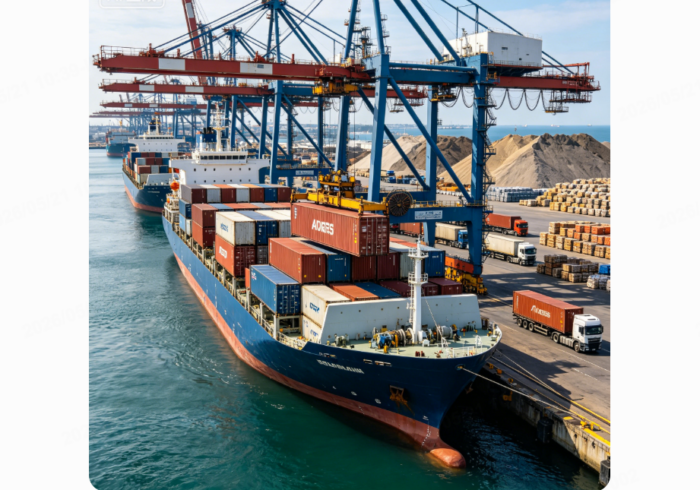
For high-volume shipments, the most cost-effective route typically involves an ocean journey across the Pacific, followed by a rail journey into the heart of the American continent. Most cargo destined for Minnesota enters through West Coast gateways like the Port of Long Beach or the Port of Prince Rupert. From there, it is loaded onto intermodal rail lines that terminate in the Chicago or Twin Cities rail hubs. The “one-stop” advantage in this scenario is the ability to use consolidated shipping. By grouping smaller orders into a single “Full Container Load” (FCL), businesses can drastically reduce the per-unit shipping cost, ensuring that the final retail price remains competitive with local liquidation outlets.
Navigating Customs, Tariffs, and Regulatory Compliance
A significant part of the value proposition for modern sourcing platforms is their ability to navigate the complex world of international trade regulations. Importing furniture, for example, requires strict adherence to the Lacey Act regarding wood sourcing, as well as various safety standards set by the Consumer Product Safety Commission. For electronics, UL and FCC certifications are mandatory. A professional B2B platform ensures that all vendors meet these specific US requirements before a single dollar is spent. This proactive compliance prevents the costly port delays and legal seizures that can happen when buying from unverified sources, protecting the business’s reputation and bottom line.
Ensuring Institutional-Grade Quality in a Virtual Marketplace
The greatest fear in wholesale china online shopping is the “expectation vs. reality” gap. When a business is used to the tangible nature of unclaimed freight—where you can see and touch the item before purchase—moving to a digital model requires a robust quality assurance framework. This framework is built on the principles of digital trust and verified data.
The Three-Tier Inspection Framework
To ensure that every shipment meets the high standards of the Minnesota market, expert buyers implement a three-tier inspection process. First is the “Initial Production Check,” where raw materials are verified. Second is the “In-Process Inspection,” which catches manufacturing defects before they are replicated across thousands of units. Finally, the “Pre-Shipment Inspection” (PSI) involves a random sampling of the finished goods by an independent third-party auditor. These auditors provide high-resolution photos and detailed reports, ensuring that the stitching on a sofa or the finish on a dining table is exactly as specified in the original purchase order.
Establishing Trust Through Verified Factory Data
Trust in the digital B2B space is no longer based on a salesperson’s word; it is based on transparent, immutable data. Leading platforms now provide detailed “Factory Profiles” that include everything from their annual export volume to their social responsibility audits. Buyers can see how many other American companies have sourced from a specific factory and read verified reviews from professional procurement officers. This data-driven approach to trust is what allows a business owner to confidently place a six-figure order with a manufacturer halfway across the globe, knowing that the quality will be consistent with the premium “unclaimed” goods their customers expect.
Sustainable Growth and the Future of Value-Based Sourcing
As we look toward 2026, the intersection of sustainability and technology will define the next chapter of the “Unclaimed Freight” story. Consumers in the Midwest and beyond are increasingly demanding transparency in how their goods are made and transported. The businesses that thrive will be those that can offer not just low prices, but also an ethical and eco-friendly supply chain.
The Green Manufacturing Mandate
China’s manufacturing sector is currently undergoing a massive “Green Revolution,” with factories investing heavily in solar power, water recycling, and non-toxic finishing processes. For a Minnesota brand, sourcing “sustainable unclaimed freight” is a powerful marketing tool. By using a B2B platform to filter for factories with ISO 14001 environmental certifications, a retailer can appeal to the eco-conscious Gen Z and Millennial demographics. These consumers are willing to pay a slight premium for goods that are ethically produced, yet the efficiencies of direct-from-China sourcing allow the retailer to keep those prices well below traditional retail levels.
AI-Enhanced Inventory Agility
Artificial intelligence is the final piece of the puzzle in modernizing the discount retail model. AI algorithms can now analyze social media trends and regional search data to predict which furniture styles or home gadgets will be in high demand in the coming months. Instead of waiting for freight to go unclaimed, retailers can use these insights to proactively source the exact products that their customers want. This “just-in-time” sourcing reduces the need for massive warehouses and minimizes the risk of dead stock, allowing the business to operate with the lean efficiency that was once the hallmark of the local liquidation warehouse.
Conclusion
The evolution of the retail landscape has brought us to a point where the local success of models like unclaimed freight of mn can finally be scaled to a global level. By embracing the power of wholesale china online shopping, business owners can move beyond the limitations of local liquidation and tap into a world-class manufacturing engine. The key to this transformation lies in the use of one-stop B2B sourcing platforms that integrate factory-direct pricing, institutional-grade quality control, and sophisticated global logistics. As the traditional boundaries of trade continue to dissolve, the opportunity to build a high-margin, high-value brand has never been more accessible. The future of discount retail is not found in the “random find,” but in the strategic, digital-first procurement of the world’s finest goods.

Related Questions & Answers
· How does wholesale china online shopping compare to buying from a local MN freight liquidator?
The primary difference lies in consistency and scalability. While a local liquidator offers immediate availability and the chance to inspect goods in person, their inventory is often random and limited. Wholesale China online shopping, particularly through a managed B2B platform, allows you to order specific designs in high volumes with consistent quality. Furthermore, by buying direct from the factory, you can often achieve lower per-unit costs than you would at a liquidation sale, as you are eliminating the final retail markup that liquidators still apply to their goods.
· Is it safe to send large payments to manufacturers found through an online platform?
Yes, provided you use a platform that offers a secure escrow payment system. In this model, your payment is held by the platform and only released to the manufacturer once you have confirmed receipt of the goods and they have passed a pre-shipment inspection. This protects the buyer from fraud and ensures that the manufacturer is incentivized to meet all quality and timeline requirements. Additionally, many platforms offer trade assurance policies that provide a full refund if the order does not meet the agreed-upon specifications.
· What is the “Total Landed Cost” and why is it important for a Minnesota business?
Total Landed Cost is the final, all-in price of getting a product from the factory floor to your warehouse in Minnesota. It includes the unit price, ocean freight, rail transport, trucking, customs duties, insurance, and any handling fees. It is the only metric that matters when determining your profit margin. For an MN business, calculating this correctly is vital because the inland transport from the coast can be a significant portion of the cost. Using a consolidated shipping service through a sourcing platform can help lower this cost and make international sourcing viable even for heavy items like furniture.
· How can I be sure that the quality of “wholesale” goods matches the “premium” unclaimed freight I usually buy?
Quality is ensured through a combination of factory vetting and independent inspections. Before sourcing, you should review the factory’s certifications and historical performance data on the platform. Once the order is placed, you must utilize third-party inspection services at various stages of production. By receiving a detailed inspection report with photos and test results before the goods leave China, you maintain the same level of quality control you would have if you were hand-picking items from a local warehouse.
· Can a small business really handle the logistics of importing a full container from China?
Modern B2B sourcing platforms are specifically designed to make this process accessible for small-to-medium businesses. They provide “Door-to-Door” logistics services where the platform manages the entire journey—from the factory loading dock in China to your warehouse door in Minnesota. This includes all the paperwork, customs brokerage, and multi-modal coordination. For many small business owners, this makes importing from China as simple as ordering from a domestic wholesaler, allowing them to focus on sales and marketing rather than logistics.
Article Abstract:
This long-form guide provides a strategic analysis of how businesses can modernize the legendary “unclaimed freight” retail model using wholesale china online shopping. By transitioning from local liquidation to global factory-direct sourcing through one-stop B2B platforms, retailers in the Midwest can secure high-volume, premium inventory at record-low prices. The article details the logistics of the China-to-Minnesota corridor, the importance of multi-tier quality inspections, and the future of AI-driven, sustainable procurement in the 2026 global market.
Hot Tags:
Strategic Sourcing Management; Digital Supply Chain Transformation; Factory-Gate Pricing; Multi-Modal Freight Logistics; Verified Vendor Networks; Industrial Scale Procurement; Bulk Furniture Sourcing; E-commerce Trade Infrastructure; Sustainable Manufacturing China; High-Margin Retail Strategies.