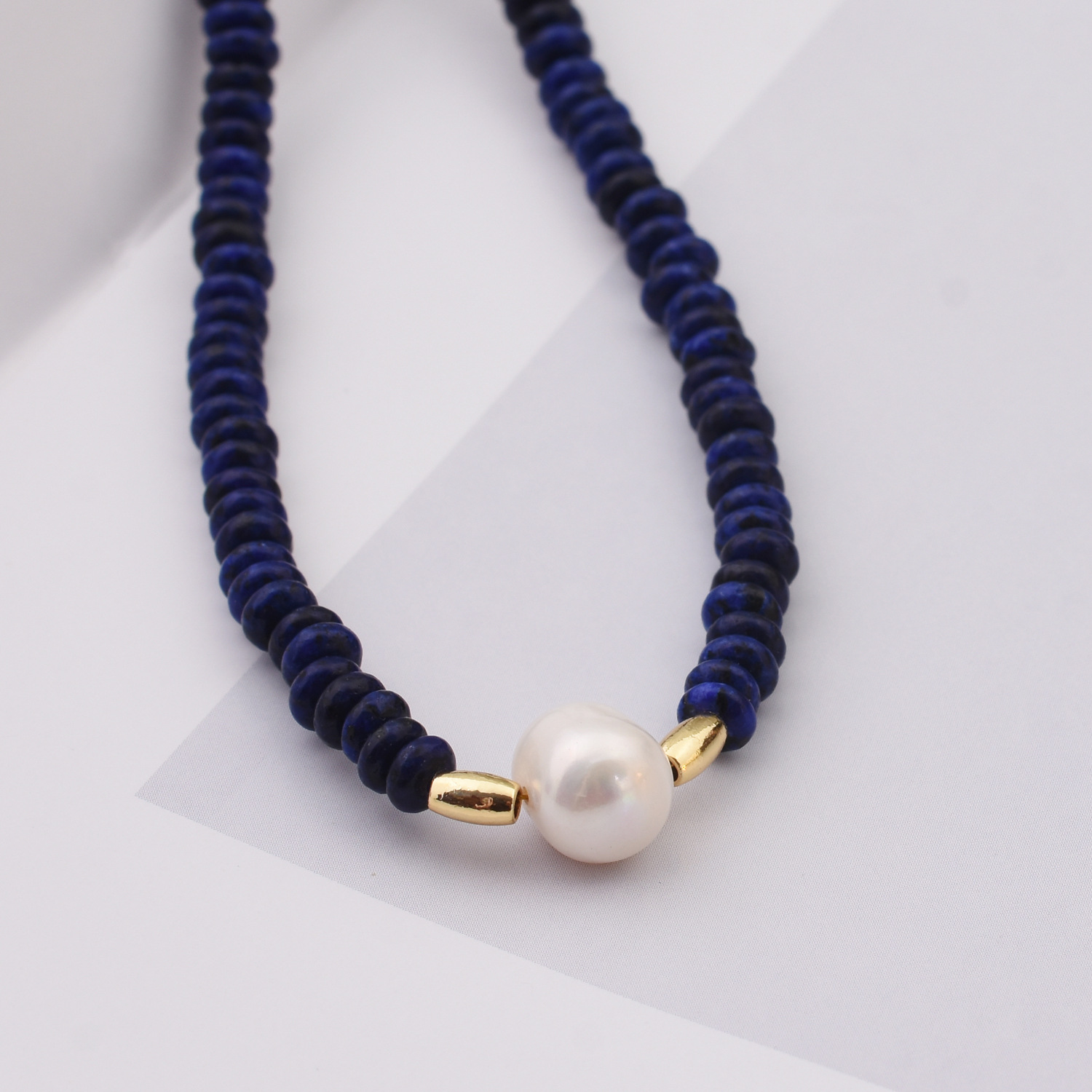
In the vast and varied world of fine jewelry, certain combinations of gemstones stand out not merely for their market value, but for the profound visual and emotional narratives they weave. Among these, the pairing of deep blue lapis lazuli with the ethereal shimmer of pearls creates a piece of jewelry that feels both ancient and contemporary. The lapis pearl necklace is a study in contrasts—the terrestrial against the aquatic, the intense saturation of the night sky against the soft, diffused light of the moon. This specific adornment has captured the imagination of designers and collectors alike, offering a unique aesthetic that transcends the fleeting trends of fast fashion. To wear such a necklace is to carry a piece of history and a fragment of the natural world’s most poetic colors around one’s neck.
Table of Contents
The Historical Majesty of the Blue Stone
The story of the lapis pearl necklace begins with the rugged mountains of Afghanistan, where the finest lapis lazuli has been mined for over six thousand years. In antiquity, this stone was prized above almost all others. It was the “Stone of Kings,” a substance so vibrant that it was believed to contain the essence of the heavens. From the funeral mask of Tutankhamun to the intricate cylinder seals of Mesopotamia, lapis lazuli was a symbol of divine favor and worldly power. Its deep ultramarine hue, often speckled with golden pyrite inclusions that look like distant stars, provided a canvas for the most skilled artisans of the ancient world.
During the Renaissance, the importance of lapis lazuli took on a new dimension in the world of art. When ground into a fine powder, the stone produced ultramarine, the most expensive and sought-after pigment for painters. It was reserved for the most significant subjects, most notably the robes of the Virgin Mary, signifying her purity and celestial connection. When this historical weight is brought into the realm of modern jewelry, the lapis lazuli beads in a necklace do not just provide color; they provide a sense of gravitas and an connection to the artistic heritage of humanity.
The Organic Grace of the Lustrous Pearl
While lapis lazuli represents the enduring strength of the earth, the pearl brings a completely different energy to the lapis pearl necklace. Pearls are among the few gemstones produced by a living organism, a process that imbues them with a sense of organic mystery. Whether they are perfectly spherical saltwater pearls or uniquely shaped freshwater baroque pearls, their luster is unparalleled. The way a pearl catches and softens light provides a perfect counterpoint to the matte or semi-gloss finish of lapis lazuli.
Historically, pearls have been associated with wisdom, integrity, and the lunar cycle. In many Eastern cultures, they were thought to be droplets of dew that fell from the sky and were caught by oysters. In the West, they became synonymous with the refinement of the aristocracy. When integrated into a necklace with lapis lazuli, the pearl acts as a light source. It breaks up the intensity of the blue, providing a rhythm to the piece that keeps the eye moving. The soft cream or white tones of the pearl highlight the gold flecks in the lapis, creating a luxurious harmony that feels complete and balanced.
The Visual Symbiosis of Color and Texture
The primary reason a lapis pearl necklace remains so popular is the inherent color theory at play. Blue and white are a classic combination that evokes a sense of cleanliness, serenity, and high contrast. This aesthetic is found in the finest porcelain of the Ming Dynasty and the traditional architecture of the Mediterranean. In jewelry, this combination is particularly striking because it mirrors the natural world—the white foam of a wave against the deep blue ocean, or white clouds drifting across a twilight sky.
Texture also plays a critical role in the appeal of these necklaces. Lapis lazuli is a metamorphic rock with a slightly grainy or substantial feel, whereas the pearl is smooth and cool to the touch. When these two materials alternate against the skin, they provide a sensory experience that is as much about the feel as it is about the look. The weight of the lapis provides a comforting presence, while the lightness of the pearls ensures the piece does not feel overly heavy or imposing. This balance makes the necklace suitable for a wide range of jewelry styles, from minimalist strands to elaborate, multi-layered statement pieces.
Architectural Variations in Necklace Design
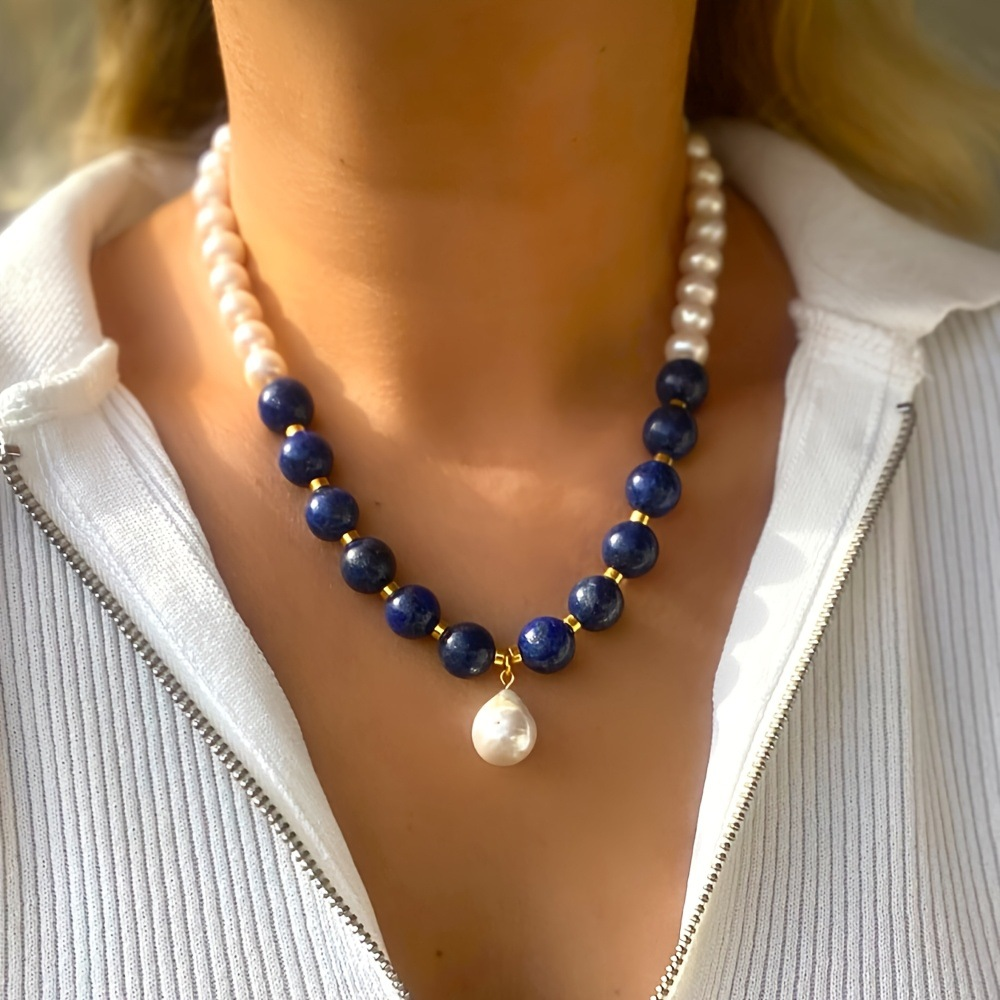
The versatility of the lapis pearl necklace is evident in the many ways it can be structured. One of the most common designs is the alternating bead pattern, where a single lapis bead is followed by a single pearl. This creates a consistent, rhythmic look that is perfect for professional settings or daily wear. However, modern designers often push the boundaries of this tradition. Some choose to cluster several small pearls between larger, faceted lapis stones to create a focal point that draws the eye toward the center of the chest.
Another popular variation involves the use of baroque pearls. These irregularly shaped pearls add a modern, avant-garde edge to the necklace. Because no two baroque pearls are exactly alike, a lapis pearl necklace featuring them becomes a one-of-a-kind work of art. The ruggedness of the lapis often complements the organic imperfections of the baroque pearls, resulting in a piece that feels “found” rather than manufactured. Furthermore, the inclusion of gold or silver spacers can enhance the necklace’s elegance, as the metallic glint mirrors the pyrite within the lapis, tying the entire composition together into a cohesive whole.
Styling for Different Occasions and Seasons
A significant advantage of the lapis pearl necklace is its ability to adapt to various wardrobes and seasons. In the summer, the blue and white palette feels nautical and fresh, pairing beautifully with white linen dresses, light blue denim, or vibrant yellow silk. It evokes images of coastal vacations and sun-drenched afternoons. During the winter months, the deep blue of the lapis takes on a more regal, nocturnal quality. Against a black turtleneck or a charcoal wool coat, the pearls stand out like stars, providing a sophisticated spark of light during the darker days of the year.
For formal events, a lapis pearl necklace can serve as a stunning alternative to traditional diamond jewelry. It offers a more distinctive, intellectual look that suggests the wearer has a deep appreciation for colored gemstones and history. When paired with gold earrings or a lapis ring, the necklace anchors an outfit with a sense of deliberate coordination. Conversely, for casual outings, a shorter choker-style lapis and pearl strand can elevate a simple white t-shirt and blazer combination, proving that luxury does not always have to be reserved for the evening.
The Craftsmanship of Stringing and Selection
The quality of a lapis pearl necklace is largely determined by the skill of the jeweler and the selection of the raw materials. Lapis lazuli comes in various grades; the most prized is a solid, deep royal blue with minimal calcite (white streaks) and a healthy dusting of pyrite. When selecting pearls for the necklace, the jeweler must match them for luster, surface quality, and size consistency. Even a slight variation in the undertone of the pearls can throw off the visual balance of the entire strand.
Stringing is another vital aspect of the craft. Most high-quality necklaces are hand-knotted on silk thread. This technique involves tying a small knot between every bead, which ensures that if the necklace ever breaks, only one bead will fall off. Moreover, the knots prevent the beads from rubbing against one another, which is especially important for pearls, as their delicate nacre can be easily scratched by the harder surface of the lapis stones. The choice of clasp—whether it is a simple lobster claw, a decorative toggle, or a vintage-inspired filigree box clasp—can also change the overall character of the piece, turning the closure into a design element of its own.
Metaphysical Meanings and Emotional Connection
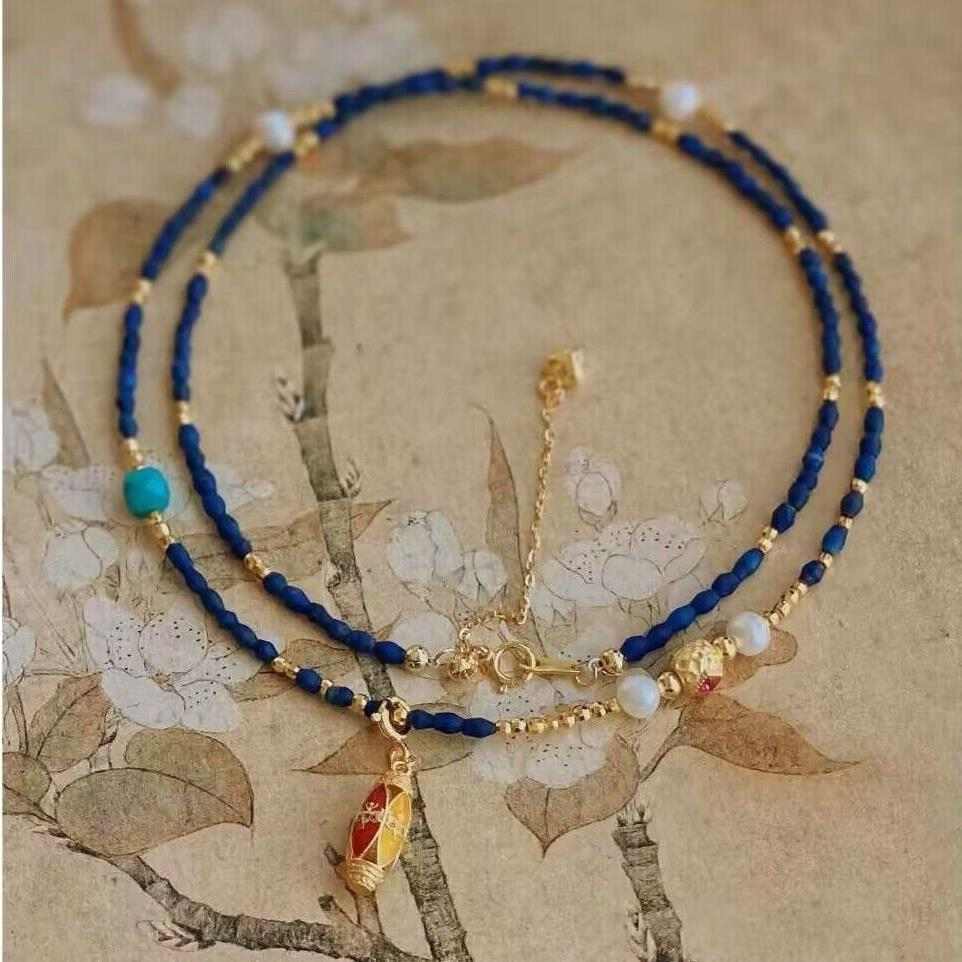
For many wearers, the lapis pearl necklace is more than an accessory; it is a source of spiritual comfort. In the realm of crystal healing and metaphysics, lapis lazuli is known as the stone of truth and enlightenment. It is believed to stimulate the throat chakra, encouraging clear communication and the expression of one’s inner self. It is often used by those who seek to deepen their intuition or find clarity in complex situations.
Pearls, on the other hand, are often viewed as symbols of inner peace and emotional balance. They are thought to help the wearer tap into their feminine energy and find a sense of calm in the midst of chaos. When these two stones are worn together in a necklace, they are said to create a synergy of wisdom and serenity. Whether or not one subscribes to these beliefs, there is no denying the emotional boost that comes from wearing something so inherently beautiful. The weight and coolness of the stones provide a grounding sensation that can act as a silent anchor throughout a busy day.
Sustainable Sourcing and Ethical Considerations
As consumers become more conscious of the origins of their jewelry, the sourcing of the lapis pearl necklace has come under greater scrutiny. Ethical jewelers now strive to ensure that the lapis they use is mined under fair conditions and that the pearls are harvested from sustainable farms. Cultured pearls, which are the standard for most jewelry today, are generally more sustainable than natural pearls, as the farming process actually helps to monitor and maintain the health of the aquatic environments where the oysters live.
When purchasing a lapis pearl necklace, it is often worthwhile to inquire about the provenance of the stones. Artisanal miners and small-scale pearl farmers often produce materials with more character and a lower environmental impact than mass-produced alternatives. By choosing a piece that is ethically sourced and handcrafted, the wearer adds another layer of value to the necklace—the knowledge that their beautiful adornment supports responsible practices and the livelihoods of skilled workers around the world.
The Enduring Popularity of the Aesthetic
Trends in jewelry may come and go, but the combination of blue and white is a permanent fixture in the pantheon of style. The lapis pearl necklace has survived the shift from the ornate Victorian era to the geometric precision of Art Deco and the bold experimentation of the mid-century modern movement. It remains a favorite because it is inherently balanced. It does not demand attention through gaudiness, but rather through its quiet, confident elegance.
In the digital age, where visual impact is paramount, the lapis pearl necklace photographs exceptionally well, making it a favorite for social media influencers and fashion photographers. The rich saturation of the blue lapis provides a perfect “pop” of color, while the pearls provide the necessary highlight. This visibility has introduced the aesthetic to a younger generation, ensuring that this classic combination will continue to evolve and find new expressions in the years to come.
Care and Preservation of Your Jewelry
To ensure that a lapis pearl necklace remains a heirloom piece, proper care is essential. Both lapis lazuli and pearls are relatively soft compared to stones like diamonds or sapphires. They are porous and can be damaged by harsh chemicals found in perfumes, hairsprays, and household cleaners. The best rule of thumb is to make the necklace the last thing you put on in the morning and the first thing you take off at night. This “last on, first off” approach minimizes exposure to cosmetic products that can dull the luster of the pearls or stain the lapis.
Cleaning should be done with a soft, slightly damp cloth. One should never use ultrasonic cleaners or steam cleaners on a lapis pearl necklace, as the intense vibrations and heat can cause the stones to crack or the pearls to lose their glow. It is also wise to store the necklace flat in a fabric-lined jewelry box, away from other pieces that might scratch the surface. Over time, the silk thread used for stringing may stretch or become soiled; having the necklace professionally re-strung every few years will keep it secure and looking its best for decades to come.
Conclusion
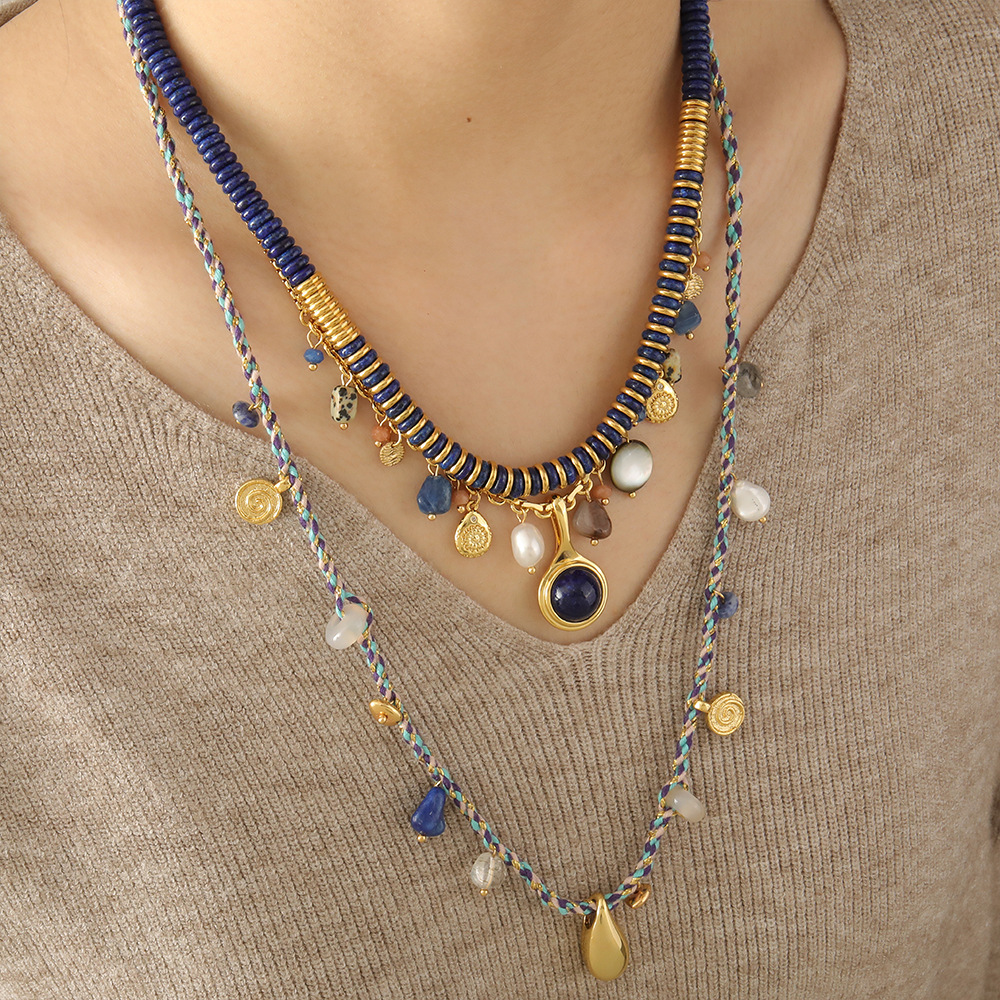
The lapis pearl necklace is a masterpiece of natural contrast and cultural history. It brings together the rugged, starry depths of the earth with the luminous, organic treasures of the sea. Throughout history, these materials have been revered by emperors and artists, and today they continue to offer a sense of refined beauty to those who wear them. Whether chosen for its striking color palette, its rich symbolic meanings, or its versatile styling potential, this necklace is a testament to the enduring power of classic design. It is a piece that tells a story of the heavens and the oceans, bound together by the skill of the jeweler’s hand. As we look toward the future of fashion, the lapis pearl necklace remains a steadfast icon of elegance, reminding us that true style is not about following the crowd, but about embracing the timeless treasures of the natural world.
How to purchase:Online B2B sourcing platform, China purchase, Chinese suppliers – LooperBuy
Frequently Asked Questions
1. How can I distinguish between genuine lapis lazuli and dyed imitations in a necklace?
Genuine lapis lazuli will almost always have some inclusions of golden pyrite or white calcite. If the beads look perfectly uniform and a flat, opaque blue without any internal variations, they may be dyed jasper or sodalite. Another test is to look at the drill holes of the beads; if the color is significantly lighter inside the hole than on the surface, it is likely that the stone has been dyed. High-quality lapis has a cold, heavy feel and a distinctive, slightly earthy smell when rubbed vigorously.
2. Are freshwater pearls or saltwater pearls better for a lapis pearl necklace?
The choice between freshwater and saltwater pearls depends on your budget and desired aesthetic. Saltwater pearls, such as Akoya or South Sea pearls, typically have a higher luster and a more perfectly round shape, but they are significantly more expensive. Freshwater pearls offer a wider variety of shapes and colors and are generally more durable due to their solid nacre composition. Many designers prefer freshwater pearls for lapis necklaces because their slightly irregular shapes complement the natural, stony texture of the lapis lazuli.
3. Can I wear my lapis pearl necklace while swimming or showering?
It is highly recommended that you remove your necklace before swimming or showering. Chlorine in pools and the salt in seawater can be extremely damaging to the organic structure of pearls and the porous surface of lapis lazuli. Furthermore, water can weaken the silk thread used to string the beads, causing it to stretch or rot over time. To preserve the longevity of your jewelry, keep it dry and away from high-humidity environments whenever possible.
4. What metal finishes look best with a lapis pearl necklace?
Yellow gold is the traditional choice for lapis pearl necklaces because it mirrors the golden pyrite flecks found within the lapis stone, creating a warm and regal appearance. However, silver or white gold can offer a more modern, cool-toned look that emphasizes the whiteness of the pearls and the crispness of the blue stones. Rose gold provides a unique, romantic contrast that can soften the overall look of the piece. Ultimately, the best metal depends on your personal skin tone and the other jewelry you plan to wear.
5. Why do some lapis beads have more white streaks than others?
The white streaks found in lapis lazuli are caused by the presence of calcite. While some collectors prefer “AAA” grade lapis which is almost entirely blue, others appreciate the character that calcite streaks bring to a necklace. These white veins can actually help bridge the visual gap between the blue lapis and the white pearls, creating a more integrated and “marbled” appearance. The amount of calcite is a matter of personal preference and often dictates the price point of the necklace, with less calcite usually resulting in a higher cost.
HOT TAG:
Lapis pearl necklace, lapis lazuli jewelry, cultured pearl strands, celestial jewelry designs, handcrafted gemstone necklaces, deep blue ultramarine stones, organic pearl luster, metaphysical stone meanings, vintage-inspired jewelry, sustainable gemstone sourcing, artisan jewelry techniques, color theory in accessories, styling blue and white jewelry, heirloom jewelry care, high-grade lapis beads, baroque pearl necklaces, ethical jewelry brands, royal blue gemstones, night sky aesthetic, nautical summer fashion, elegant formal accessories, hand-knotted silk necklaces, pyrite inclusions in lapis, meaningful jewelry gifts, timeless fashion icons.