Table of Contents
1. Service classification
Warehousing service refers to the warehousing service provided by the rookie from the time when the goods are received in the warehouse or delivered by the logistics designated by the merchant to the time when the goods are delivered out of the warehouse and transferred to the designated consignee, including the delivery of goods into the warehouse, warehouse storage management, delivery of goods out of the warehouse and other services.
The operation time described in this annex is based on the recording time of CAINIAO system.
Handover warehousing:
Hand-over warehousing means that the goods are transported by the merchants themselves, or transported to the designated warehouse by the logistics provider arranged by the rookie, and enter the unloading area, and the rookie carries out the operations of unloading, sorting, receiving and warehousing.
- Handover standard:
Rookie should check the completeness of the goods when unloading, including whether the consignment package is intact, whether the outer box is intact, and whether it is consistent with the consignment number and the number of boxes in the delivery note. If there is a discrepancy between the consignment number and the number of boxes, the outer package of the goods is damaged, there are serious stains, and there are serious signs of flooding, the rookie should temporarily stop the handover and communicate with the merchant within 2 hours, and further handover can be carried out after being confirmed by the merchant.
- Goods warehousing reservation:
If the rookie delivery service provider is not used, the merchant needs to make an appointment with the rookie service provider by mail or nail before unloading the goods in the warehouse according to the appointment time, and provide the necessary information such as the license plate/driver/vehicle weight required for entering the area one day in advance. Merchants need to deliver the goods according to the appointment time, and ensure that they arrive at the warehouse no later than 15:00 on the appointment day. If the car is parked due to problems of non-rookie and rookie partners, the merchants shall bear the car parking fees themselves. If the goods enter the warehouse using the rookie transportation service, there is no need to make an appointment offline.
- In the process of tally warehousing, if the goods are abnormal, the rookie will handle them according to the requirements of the merchant manual. Novices need to provide the receiving and tally services based on the needs of merchants, such as tally to boxes, tally to pieces or tally to consignment, and charge corresponding fees.
If the merchant requests the goods to be tallied in consignment, the rookie should check the goods in consignment and feed back the final tally result. The rookie is not responsible for the state of the goods in the pallet (including but not limited to the number of boxes and quality, etc.); If it is not the whole care or no shipping mark, the rookie should provide services according to the requirements of the merchants and charge the corresponding fees according to the tally to the box or the tally to the piece.
If the merchant requests tally to the box, the rookie should take the box as the minimum inspection unit and feed back the final tally result. The rookie is not responsible for the commodity status (including but not limited to quantity and quality) in the original box. If the outer box is not the original box and has been opened before warehousing, the rookie will provide services according to the standard of tally and receive the corresponding fees.
If the merchant chooses to tally goods to pieces, the rookie should tally goods in SKU and feed back the tally results based on pieces.
If the merchant has two or more kinds of warehousing tally requirements for the same vehicle, the rookie has the right to charge the merchant additional value-added service fees and appropriately extend the shelf life of warehousing tally according to Appendix 1: Project Quotation Table.
- Validity check: for the goods after tally, the validity information provided by the merchant shall prevail; If the information of the validity period of the mark or the outer box is requested, the rookie needs to check it, and feedback it to the merchant after finding abnormal information; If the information on the expiry date of the mark or the outer box is requested, the merchant shall provide the rookie with the corresponding expiry date information separately. For the goods that have been tallied, the rookie should check the expiration date information of each item. If the goods themselves have no expiration date information, the information provided by the merchant shall prevail. If the merchant does not provide it, the rookie will not provide the expiration date checking service, and will not bear any compensation for breach of contract or product liability arising from the expiration date. If the rookie finds that the validity period does not match (the validity period of the goods does not match the validity period of the shipping mark and the date of the difference has crossed the month), it shall be recorded in the tally report; For the same goods with multiple expiration dates in the same month, the merchant agrees that the rookie will enter the system according to the earliest expiration date of the batch of goods in that month.
- Quantity difference: if the goods arrive in excess or shortage, the rookie will inform the merchant that the shortage will be put into storage according to the correct tally quantity, and the overflow will be put into storage according to the actual declared quantity.
- Pallet management: for incoming goods with pallets, the warehouse provides ledger records of pallet warehousing. The warehouse judges the quality of the incoming pallet. If the pallet meets the warehouse circulation standard, it will be circulated in the warehouse. If the pallet does not meet the warehouse circulation standard, the merchant authorizes the rookie to scrap it. For the pallets that meet the circulation standards, the rookie will keep them for the merchants free of charge, and the number of available pallets will be subject to the number maintained by the rookie or rookie service provider in the system. For the pallet that rookie provides free storage service, rookie does not assume any compensation responsibility for the risk of damage or loss of the pallet in the warehouse, but if the loss ratio of the pallet exceeds 10% and the loss is caused by the fault of the rookie service provider, rookie can assist the merchant to claim compensation from the service provider.
warehousing management
Warehousing service refers to the service that rookie provides storage and custody for merchants’ warehousing goods, ensuring that the warehousing goods are in a safe state and do not change abnormally in quantity and appearance. At present, the warehousing service only provides storage environment with normal temperature and humidity (normal temperature and humidity refer to the temperature and humidity without any temperature and humidity control measures). If it is necessary to provide special storage requirements such as low temperature, constant temperature, moisturizing and freezing, it is necessary to separately confirm with the rookie or rookie service provider that the corresponding services can be provided, and the rookie will charge according to the service quotation standard of constant temperature and humidity agreed in the annex. Unless the merchant confirms with the rookie in writing before providing the service, the storage requirements of the merchant for special categories such as cold chain products or dangerous goods shall be subject to the information filled in by the merchant in the rookie system; If the merchant fails to obtain written confirmation from Cainiao or fill in relevant information in the system, Cainiao will only arrange to provide storage services at normal temperature and general goods, and will not bear the responsibility of not meeting the storage requirements of special categories. At the same time, the rookie is not liable for the losses caused by the change of commodity quality, commodity packaging and the expiration of the quality guarantee period. If the rookie can’t meet the special storage needs of the merchant, the merchant still insists on delivering the goods into the warehouse, so the rookie is not responsible for the loss risks such as deterioration and melting of the goods.
Inventory service
1.Inventory service refers to the regular or irregular inventory service provided by rookie to ensure the accuracy of the quantity, appearance and expiration date of the goods in stock;
When implementing inventory service, novices should follow the following principles (if the inventory of tally items reaches SKU dimension, if tally items arrive in boxes or tally items arrive in consignments, inventory items arrive in boxes or consignments respectively):
- Cycle inventory service standard: the rookie counts all the goods in stock in batches according to the location or category, completes the inventory of the planned goods every day, and completes the inventory of all the goods in stock within one month; The inventory contents include: SKU barcode (when the goods are tallied), location, quantity, commodity status, commodity validity period, etc.
- Service standard of comprehensive inventory: rookie can carry out comprehensive inventory once a month and notify the merchant in writing in advance. During the comprehensive inventory, all logistics operations can be suspended. If the merchant informs the rookie in writing that the goods need to be delivered out of the warehouse during the inventory, the specific delivery time should be negotiated by both parties. The comprehensive inventory content should include SKU barcode, location, quantity, commodity status, commodity expiration date, etc.
2.Support merchant inventory service
On-site inventory is a value-added service. If the merchant needs inventory, it should inform the rookie by email more than 5 working days in advance, and the merchant will pay the inventory fee to the rookie according to the attachment.
- Merchants should take inventory in the warehouse within the scheduled time;
- The inventory in the warehouse must be accompanied and guided by novice personnel (the inventory basis is based on real-time inventory);
- After the inventory is completed, check the inventory differences, and the inventory results must be signed by the merchant, the rookie escort and the first person in charge (or the warehouse person in charge) for confirmation;
- The inventory results are sent by the merchant’s mail, and the inventory is corrected in time after no objection;
The rookie is not responsible for the inventory adjustment authorized by the merchant.
Batch management
Batch or expiration date management service refers to the rookie’s expiration date management and batch management of stored goods to ensure that the incoming batch and expiration date of the goods in the warehouse are within the effective monitoring range;
Rookie should follow the following principles when implementing the validity period and batch management service:
- Receiving rules:
The way a rookie tallies goods by box, by consignment or by piece should depend on the needs of the merchants. The merchant needs to provide the validity period of the goods, and the rookie needs to compare it with the information provided by the merchant according to the actual validity period of the goods.
- Delivery rules:
The principle of “delivery before expiration” shall be applied to the goods that need to be managed during the validity period. Unless the merchants have special requirements on the validity period of the delivered goods, if the merchants have no special requirements, the default goods shall be delivered according to the validity period-first overdue first out; If the merchant fails to provide expiration date information or invalid goods, the principle of “first in, first out” shall be followed.
- Other rules:
Unless otherwise confirmed by both parties, the rookie has the right to notify the merchant in writing not to enter the warehouse for the goods that are prohibited from entering the warehouse and have invalid period information required by the merchant manual;
delivery of cargo from storage
- Delivery service refers to taking the goods off the shelves, tallying the goods, and handing over the goods to be delivered to the delivery supplier designated by the merchant.
- When leaving the warehouse, the rookie will take the tally off the shelf according to the tally dimension issued by the system, and the tally fee will be settled by comparing the tally dimension of the goods in the warehouse with the tally dimension required by the merchant. If the tally dimension of the goods in the warehouse is consistent with the tally dimension in the warehouse, it will be settled according to the tally dimension of the goods in the warehouse.
If the merchant temporarily modifies the standard of the original outbound instruction after issuing the outbound instruction, the rookie has the right to charge according to Annex I and extend the outbound time limit.
Tally report confirms discrepancy.
The rookie warehouse will provide tally report when leaving the warehouse, and communicate with the merchants for the difference. If there is a shortage of goods due to the rookie warehouse, the rookie warehouse will compensate the merchant for the losses in accordance with Article 3.
Dato standard
1.Datuo standard
If the merchant has requirements for consignment, the rookie warehouse will cooperate with the merchant’s requirements for consignment, but the consignment height should not exceed 1.8 meters (including pallets), the air transportation should not exceed 1.4 meters (including pallets), and the cross-border vehicles and land transportation should not exceed 1.8 meters (including pallets). If the merchant has no special requirements, the rookie warehouse will consign the goods in the system. If there are no supporting rules in the system, the rookie supporting standard shall prevail. That is, the priority of the consignment standard is “merchant requirements” higher than “consignment standard” higher than “rookie standard”. The height of bagged milk powder/boxed milk/pet grain products shall not exceed 1.3m (including trays), and corner guards shall be added for reinforcement.
If the merchant supports it, it shall not exceed the maximum limit of 1.8 meters (including pallets).
2. Shipping mark standard (only for consignment goods)
The rookie warehouse should attach a shipping mark to the consignment goods. The shipping mark should include the quantity, quality status and expiration date of SKU dimension, and the volume information of the consignment goods should be attached, which should be consistent with the warehouse system.
Loading standard
1 .Loading standard of consignment goods
The rookie warehouse should ensure the maximum utilization rate of vehicle loading when loading, and communicate with the merchants in advance if there are special circumstances. If the merchant requires stacking, it needs to inform the rookie in writing, and the risk of cargo damage caused by stacking shall be borne by the merchant.
2. Bulk container loading standard
The goods of the merchant cannot be delivered to B in bare sales packaging, except as required by the merchant. If the merchant requests the warehouse to provide additional carton packaging, the rookie has the right to charge the value-added fee of the carton, and the fee standard is subject to the agreement in Annex 4.
Warehouse loading personnel must handle the goods with care, with the front facing up, heavy but not light, large and small, and the code batch outward. It is forbidden to throw, throw or throw products. Under no circumstances can you step, stand, sit or lie on the product directly or indirectly. If necessary, you must use the climbing ladder.
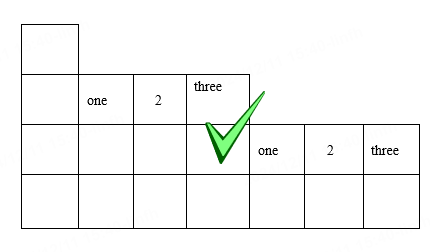
For goods that are not fully loaded, they must be stacked in layers when they leave the crib, and it is necessary to consider the way to ensure the flat stacking of goods to the greatest extent; The last row of products on each floor and the last row of products on the next floor must have the length of 3 products.
As shown in the figure below:
Delivery from warehouse
Delivery service means that the rookie will hand over the goods to be delivered from the warehouse after tally with the logistics service provider designated by the merchant. For the released order, the rookie will hand over the goods to the logistics service provider designated by the merchant and make a record of the effective signature.
Handover standard:
The warehouse needs to provide the standard handover form, and hand over the consignment number and the quality of the consignment goods with the motorcade at the rear. After the vehicle leaves the warehouse, the rookie warehouse is not responsible for the number of bulk containers.
Outbound to Da Mao Warehouse:
The rookie warehouse supports the transfer of goods to the big trade warehouse, and supports the necessary warehouse storage management. If the merchant has labeling requirements, after the rookie confirms that it can provide corresponding services, the rookie will charge according to the standard of “sorting goods by piece”.
Scope of exemption: If the goods cannot be delivered on time due to non-rookie reasons, the rookie will not bear any responsibility.
Related in-house operation services for return, warehouse transfer and destruction:
According to the needs of merchants, rookie provides professional warehouse operations related to returning goods or transferring warehouses. If the goods are returned to the warehouse and the goods are picked up by the merchants themselves, the merchants shall complete it within 3 working days. If the merchant fails to return the goods, transfer the warehouse, destroy the goods or pick up the goods within the agreed time, the rookie has the right to charge the demurrage fee according to Annex 1.
Provide value-added services
Rookie can provide value-added services, such as assembling sets, changing packaging, etc. Rookie will charge value-added service fees according to Annex 1. If the merchant needs the rookie to provide other value-added services according to his own requirements, the rookie has the right to negotiate with the merchant to charge.
Complaints and compensation
2.1
If a merchant has lost or damaged goods in the use of rookie logistics services, he can inquire, complain or apply for compensation through CAINIAO system background. If the complaint is verified to meet the compensation standard, the merchant will receive corresponding compensation. The amount of compensation is paid in RMB. If the merchant has an Alipay account, the amount of compensation will be returned to the Alipay account authorized by the merchant; If the merchant does not have an Alipay account, the compensation amount will be returned to the fund account opened by the rookie for the merchant. In order to ensure the timely handling of complaints, the merchant must initiate complaints under the corresponding complaint types within 80 natural days from the date of service generation (60 natural days after the fee dispute complaint merchant confirms the fee).
2.2
When submitting a complaint, the merchant shall provide complete and accurate relevant evidence information. If the evidence is insufficient or supplementary evidence is needed, the evidence shall be uploaded within 48 hours. If the merchant fails to provide or supplement the evidence within the specified time, the complaint will not be established. After receiving the complaint, the rookie will review the evidence materials provided by the merchants and/or rookie partners and judge the responsibility. If the complaint is established, the compensation shall be executed according to the rookie’s judgment result and the following complaint compensation standard.
Rookie will not bear any compensation for the loss of merchants caused by delays, lost goods, damaged goods, etc. caused by non-rookie/rookie partners.
| Complaint type | Illustration of anomalies | Mode of proof | Criterion of judging responsibility | Compensation standard |
| Delivery error | The goods received in the warehouse are inconsistent with those in the original order. | 1. If the rookie partner informs the merchant that the actual goods are sent wrong, the merchant shall provide the corresponding written notice; 2. If the transfer warehouse is a non-rookie warehouse: The merchant shall provide tally report, tally video, shipping mark or box number (if any), photo of hand-over sheet, photo of vehicle seal, etc. 3. Where the transfer warehouse is a rookie warehouse: The merchant shall provide the tally report provided by the transfer warehouse and confirmed by the merchant. | The merchant effectively proved that the rookie or rookie partner caused the wrong delivery of the goods, and the complaint was established. Note: if the tally arrives, the claim will be made by mistake according to the single piece; If the tally arrives at the container, only the dimension of the container is wrongly sent for compensation; If the tally arrives at Tuowei, only Tuowei will make a claim by mistake. | 1. If the wrong goods are shipped back by the rookie or rookie partner, the rookie or rookie partner shall bear the corresponding expenses; 2. If the wrong goods are shipped back by the merchant, the rookie will compensate according to the invoice amount corresponding to the logistics expenses provided by the merchant; 3. If the wrong goods cannot be returned, compensate the value of the wrong goods, the corresponding logistics expenses and other related expenses caused by the wrong goods. |
| Loss of goods | Total or partial loss of goods. | 1. If the rookie partner informs the merchant of the actual loss of the goods, the merchant shall provide the corresponding written notice; 2. If the transfer warehouse is a non-rookie warehouse: The merchant shall provide tally report, tally video, shipping mark or box number (if any), photo of hand-over sheet, photo of vehicle seal, etc. 3. Where the transfer warehouse is a rookie warehouse: The merchant shall provide the tally report output from the transfer warehouse and confirmed by the merchant. | The merchant effectively proves that the rookie or rookie partner caused the loss of goods, and the complaint was established. Note: if the tally arrives, the claim will be made according to the loss of a single piece; If the tally arrives at the container, only the loss of the container dimension will be settled; If the tally arrives at the consignment, only the loss of the consignment will be settled. | Compensation shall be made according to the value of the lost goods. |
| Damaged goods | Damaged contents (including damaged sales package) Note: Definition of sales package Single SKU packaging, that is, sales packaging. | If the rookie partner informs the merchant of the actual damage of the goods, the merchant shall provide the corresponding written notice; 2. If the transfer warehouse is a non-rookie warehouse: The merchant shall provide tally report, tally video, shipping mark or box number (if any), photo of hand-over sheet, photo of vehicle seal, etc. 3. Where the transfer warehouse is a rookie warehouse: The merchant shall provide the tally report provided by the transfer warehouse and confirmed by the merchant. | 1. The merchant effectively proves that the goods are damaged due to the rookie or rookie partner, and the complaint is established. 2. Damaged goods have been found before warehousing. If the rookie transportation service is used, the goods have been found to be damaged when picking up the goods at the trunk line designated by the rookie; The merchant delivered the goods to the warehouse by himself, and it was found that the goods were damaged when the goods were transferred to the warehouse, and the complaint was not established; Note: Arrival of tally: the number and damage of pieces shall be indicated on the handover certificate and tally report, and compensation shall be paid for the damage of a single piece; Tally to the container: the number and damage of the container should be indicated on the handover certificate and tally report, and the claim can only be paid if the whole container is damaged and the contents are damaged; Tally to consignment: the quantity and damage of consignment are indicated on the handover certificate and tally report, and claims can only be made if the consignment packaging is damaged and the contents are damaged. | Compensation shall be made according to the value of the damaged goods. |
| Cost dispute | Overcharging due to rookie or rookie partner, such as 1. Failing to collect service fees as agreed; 2. Charge the value-added service fee without the confirmation of the merchant; | Effective proof includes but is not limited to, Billing bills (including charging items and charging amount) and descriptions of items corresponding to the bills that do not meet the actual quantity considered by the merchants. | The merchant provides valid proof that the fee is overcharged due to the rookie or rookie partner, and the complaint is established. | Because the service fee is not charged as agreed or the value-added service fee is not confirmed by the merchant, the rookie will refund the corresponding overcharge. |
| Inventory variance | Refers to the fact that the actual quantity of goods in the warehouse does not match the quantity recorded in CAINIAO system (according to the tally standard selected by the merchant when warehousing). | Merchants provide evidence such as warehouse inventory report and chat screenshots to communicate inventory differences with warehouses. Note: If the merchant chooses to tally to the container or to consign the goods, the inventory will be checked according to the tally dimension required by the merchant, and no compensation will be paid for the difference in the finer dimension. | The actual quantity of goods in the warehouse is inconsistent with the quantity recorded in CAINIAO system, and the warehouse operation is deficient, and the complaint is established. | Compensation shall be made according to the value of the goods in shortage, and the inventory data shall be adjusted according to the physical inventory. |
| Incoming delay (2B) | When the goods arrive at the warehouse, they are put into storage and put on the shelves beyond the time limit (for promotions and holidays, it shall be subject to other agreements). | The merchant shall provide valid vouchers, including but not limited to: the physical delivery receipt to the warehouse, screenshots of the logistics details interface of the rookie system, etc. The rookie is exempted from liability for compensation in the following cases: 1. Because the parcel was found to be abnormal when receiving the goods, the merchant did not confirm the treatment plan in time, which led to the delay in warehousing, and the rookie could provide valid proof; 2. Delayed rookie exemption caused by other non-rookie reasons, including but not limited to: A. The rookie stops working according to the written request of the merchant; B. promote the special rule requirements; C. systematic problems of rookie’s written confirmation; D. Force majeure, including but not limited to extreme weather; E. Exemption confirmed by rookie Xiaoer in writing | When the goods arrive at the warehouse and are reported first and then sorted, if the goods arrive at the warehouse more than 2 natural days before the good goods are put on the shelves (excluding the time for the tally report to be confirmed by the merchants); If the goods arrive at the warehouse more than 4 working days before they are put on the shelves, the complaint will be established; 2. If the merchant has special tally requirements, the complaint is not established; | Compensation shall be made according to 200 yuan/day/bill, and the maximum amount of each bill shall not exceed 1000 yuan RMB. |
| Delivery delay | The actual delivery time of the warehouse is later than the delivery time. | Merchants must provide valid vouchers, including but not limited to: written records of communication with the warehouse, screenshots of the logistics details interface of the rookie system, etc. | The actual delivery time of the warehouse is later than the expected delivery time (the judgment is established, otherwise, the judgment is not established); 2. The warehouse fails to complete the delivery within the time limit agreed with the merchant in writing, and the complaint is established; 3. If the merchant has special tally requirements, the complaint is not established; | If the actual delivery time of the warehouse is later than the delivery time within 48 hours, it shall be compensated by 1 time of the transaction price of the current transaction order; if it exceeds 48 hours, it shall be compensated by 2 times of the transaction price. |
| Incoming tally difference | The warehousing tally report provided by the warehouse is inconsistent with the actual arrival quantity or damaged. | 1. The merchant must provide the warehousing tally report of the rookie warehouse and the screenshot of the chat with the warehouse to communicate the inventory difference; 2. If the merchants deliver the goods to the rookie warehouse by themselves, they must provide the handover form and photos signed and confirmed by the rookie warehouse simultaneously; 3. If the transfer-out warehouse is a non-rookie warehouse, the corresponding outbound tally video shall be provided simultaneously to confirm the outbound quantity and quality; | The complaint was established because of the discrepancy in warehousing tally caused by the warehouse. | Pay compensation according to the value of different commodity quantity. |
| Departure tally difference | The delivery tally report provided by the warehouse is inconsistent with the actual arrival quantity or damaged. | The merchant shall provide the outbound tally report of the rookie warehouse and a screenshot of the chat with the warehouse to communicate the inventory difference. | Due to the warehouse reasons, there are discrepancies in warehouse tally, and the complaint is established. | Pay compensation according to the value of different commodity quantity. |
| Expiry maintenance error | 1. The merchant finds that the system validity period of the batch receipt document is inconsistent with the physical validity period. 2. The rookie confirmed the validity maintenance error, but did not complete the validity adjustment within 48 hours after discovery. | The merchant provides a screenshot of the validity of the corresponding receipt document system. | Scenario 1: The rookie cannot effectively prove the validity maintenance error caused by non-rookie reasons, and the verdict is established. Scenario 2: The warehouse should complete the validity adjustment within 48 hours after discovery, and if the overtime judgment is established. | Scenario 1: Pay 50 yuan for each receipt; Scenario 2: Pay 50 yuan for each receipt; Remarks: If you hit Scene 1 and Scene 2 at the same time, you need to pay 100 yuan a total of each receipt. |
The specific compensation rules issued by rookie during the promotion period and other festivals take precedence over these rules.