Table of Contents
Introduction to Drop Shipping
Drop shipping has emerged as a popular business model for aspiring entrepreneurs looking to enter the e-commerce space without the burden of inventory management. This model allows you to sell products directly from suppliers to customers, eliminating the need for upfront investment in stock. In this article, we will explore the essential components of a drop shipping business plan, strategies for success, and tips for overcoming common challenges.

Understanding the Drop Shipping Model
What is Drop Shipping?
Drop shipping is a retail fulfillment method where a store doesn’t keep the products it sells in stock. Instead, when a store sells a product, it purchases the item from a third party and has it shipped directly to the customer. This means that the seller never sees or handles the product.
Advantages of Drop Shipping
- Low Startup Costs: One of the most significant advantages of drop shipping is that it requires minimal capital to start. You don’t need to invest in inventory upfront, which reduces financial risk.
- Wide Product Selection: Since you don’t have to pre-purchase the items you sell, you can offer a wide range of products without worrying about storage space.
- Location Independence: A drop shipping business can be run from anywhere with an internet connection, providing flexibility and freedom.
- Scalability: As your business grows, you can easily scale your operations without the need for significant investments in inventory or warehousing.
Disadvantages of Drop Shipping
- Lower Profit Margins: Drop shipping typically has lower profit margins compared to traditional retail models, as you are paying a premium for the convenience of not holding inventory.
- Inventory Issues: Since you rely on suppliers for inventory, you may face challenges with stock levels, leading to potential customer dissatisfaction.
- Shipping Complexities: Managing shipping from multiple suppliers can complicate logistics and increase costs.
Crafting Your Drop Shipping Business Plan
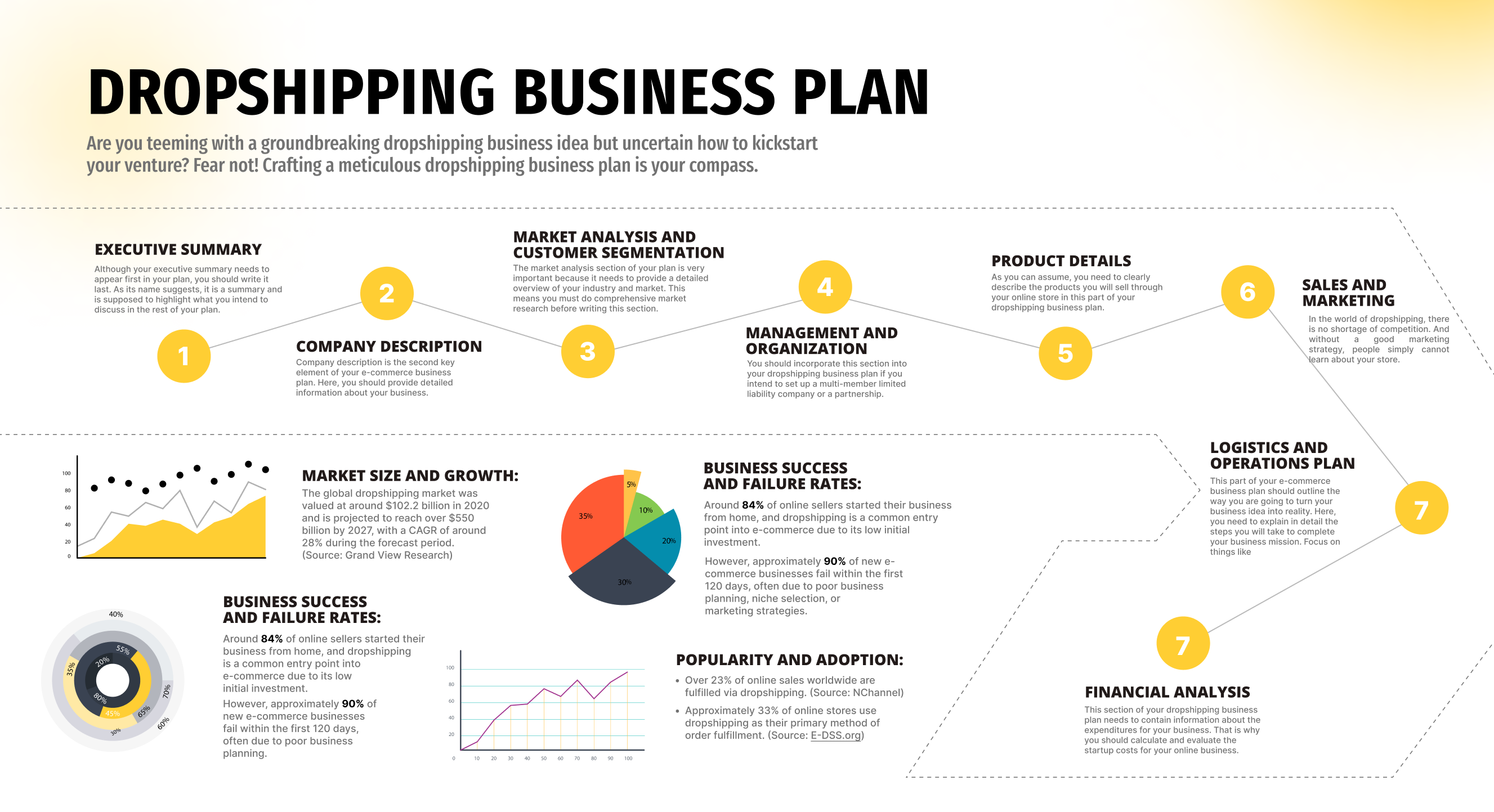
Executive Summary
The executive summary is a brief overview of your business plan. It should include your business name, the products you plan to sell, your target market, and your unique selling proposition (USP). This section should be concise yet compelling, as it sets the tone for the rest of your plan.
Market Research
Conducting thorough market research is crucial for understanding your target audience and identifying potential competitors. This section should include:
- Target Market Analysis: Define your ideal customer, including demographics, interests, and purchasing behavior.
- Competitive Analysis: Identify your main competitors, their strengths and weaknesses, and how you plan to differentiate your business.
Marketing Strategy
Your marketing strategy outlines how you plan to attract and retain customers. Key components include:
- Branding: Develop a strong brand identity that resonates with your target audience.
- Digital Marketing: Utilize social media, email marketing, and search engine optimization (SEO) to drive traffic to your online store.
- Content Marketing: Create valuable content that engages your audience and establishes your authority in the niche.
Operations Plan
The operations plan details how your business will function on a day-to-day basis. This includes:
- Supplier Relationships: Establish strong relationships with reliable suppliers to ensure product quality and timely shipping.
- Order Fulfillment Process: Outline the steps involved in processing orders, from customer purchase to delivery.
- Customer Service: Develop a customer service strategy to address inquiries and resolve issues promptly.
Financial Projections
Financial projections are essential for understanding the potential profitability of your drop shipping business. This section should include:
- Startup Costs: Estimate the initial costs required to launch your business, including website development, marketing, and legal fees.
- Revenue Projections: Forecast your expected sales based on market research and marketing efforts.
- Break-Even Analysis: Determine how long it will take to cover your initial investment and start making a profit.
Strategies for Success in Drop Shipping
Choosing the Right Niche
Selecting a profitable niche is critical for the success of your drop shipping business. Consider factors such as market demand, competition, and your personal interests. A well-defined niche will help you target your marketing efforts effectively.
Building a User-Friendly Website
Your website is the face of your drop shipping business. Ensure it is visually appealing, easy to navigate, and optimized for mobile devices. Include high-quality product images, detailed descriptions, and customer reviews to enhance credibility.
Leveraging Social Media
Social media platforms are powerful tools for promoting your drop shipping business. Create engaging content that showcases your products and encourages user interaction. Consider running targeted ads to reach a broader audience.
Analyzing Performance Metrics
Regularly analyze key performance metrics to assess the effectiveness of your marketing strategies and operational processes. Metrics to track include website traffic, conversion rates, and customer acquisition costs.
Overcoming Common Challenges
Managing Supplier Relationships
Maintaining strong relationships with suppliers is essential for ensuring product quality and timely delivery. Communicate regularly and address any issues promptly to avoid disruptions in your supply chain.
Handling Customer Complaints
Customer complaints are inevitable in any business. Develop a clear process for addressing complaints and resolving issues to maintain customer satisfaction and loyalty.
Adapting to Market Changes
The e-commerce landscape is constantly evolving. Stay informed about industry trends and be prepared to adapt your business strategies accordingly.
Conclusion
Creating a successful drop shipping business plan requires careful planning, market research, and a solid marketing strategy. By understanding the drop shipping model, crafting a comprehensive business plan, and implementing effective strategies, you can build a thriving online business. Remember to stay adaptable and responsive to market changes to ensure long-term success.
Ready to kickstart your drop shipping journey and discover a world of unique products? Explore the endless possibilities at https://looperbuy.com/.
Related Questions & Answers
· What is the best platform for starting a drop shipping business? Shopify is widely regarded as one of the best platforms for drop shipping due to its user-friendly interface and extensive app ecosystem.
· How do I find reliable suppliers for my drop shipping business? You can find reliable suppliers through platforms like AliExpress, Oberlo, and SaleHoo, or by directly contacting manufacturers.
· What are the common mistakes to avoid in drop shipping? Common mistakes include poor supplier selection, inadequate market research, and neglecting customer service.
· How can I improve my drop shipping profit margins? To improve profit margins, consider negotiating better prices with suppliers, optimizing shipping costs, and focusing on high-demand products.
· Is drop shipping a sustainable business model? While drop shipping can be profitable, it requires continuous effort in marketing, supplier management, and customer service to remain sustainable.
Hot Tags: Drop Shipping; E-Commerce; Business Plan; Online Retail; Market Research; Digital Marketing; Supplier Management; Customer Service; Niche Selection